Bułgarskie Kukeri
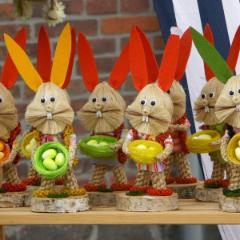
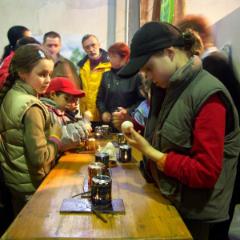
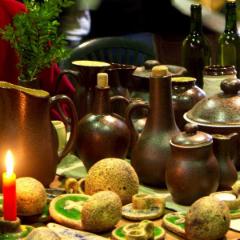
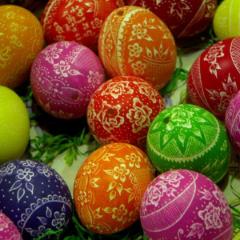
Bułgarskie Kukeri i Jarmark Wielkanocny w Szreniawie
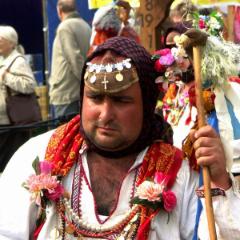
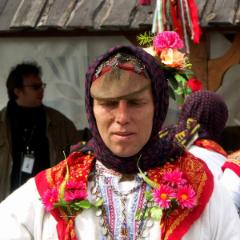
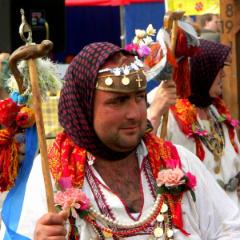
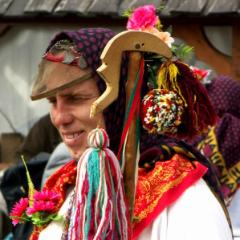
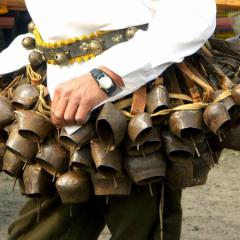
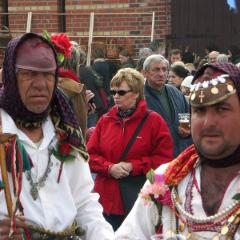
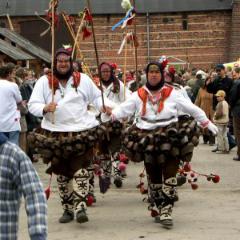
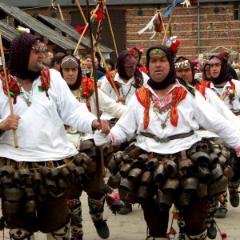
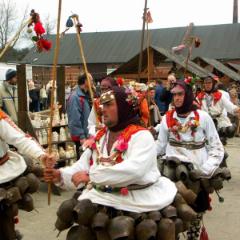
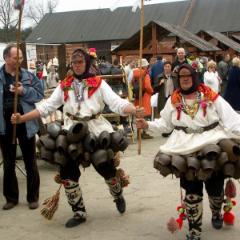
Kukeri to ludowy bułgarski rytual pochodzący z czasów trackich. Kukeri to przebrani ludzie, tańczący gdy kończy się zima i gdy natura powraca do życia. Kukerami mogą być jedynie mężczyźni. Przebrani są zazwyczaj w skóry owcze, noszą straszne maski i чанове (miedziane pasy). Tańczą i śpiewają, żeby przegnać złe moce.
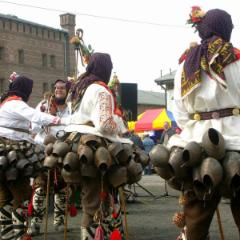
Grupa Starcy pochodzi ze wsi Dybene, gmina Karłowo. Działa tam przy miejscowym Czitaliszte (instytucja w Bułgarii pełniąca rolę biblioteki, centrum kultury). Rytuał Kukeri stawiał sobie za cel odstraszenie złych duchów i zapewnienie płodności ludziom oraz światu roślinnemu i zwierzęcemu, co w efekcie oznaczało dostatek i spokojną egzystencję dla ludzi. Odtwarzał on w różnej formie, ale zawsze schematycznej i uproszczonej proces powstawania nowego życia. Mogła być to symboliczna orka i siew lub mniej lub bardziej naturalistyczny czy też tylko symboliczny akt seksualny. W przypadku wsi Dybene w obrzędzie uczestniczą zamaskowani mężczyźni i grupa kobiet. Obrzęd odbywał się na centralnym placu wsi, rozpoczynają go stojące w grupach kobiety. Najpierw śpiewają stosowne pieśni, potem tańczą horo (narodowy taniec zespołowy). Asystują im rozstawieni wokół placu zamaskowani mężczyźni.
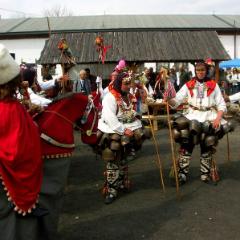
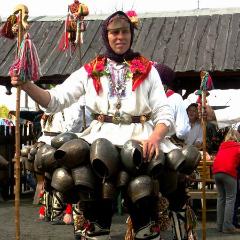
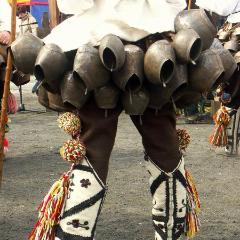
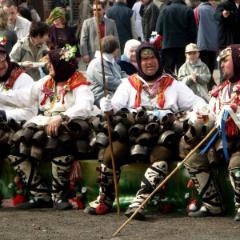
Ważnym elementem ich stroju są dzwonki. W przerwach pomiędzy śpiewami i tańcami kobiet dzwonią nimi bardzo donośnie. Pod koniec dnia mężczyźni zdejmują dzwonki, rozpraszają kobiece horo, dwaj z nich chwytają młodą, nie zamężną dziewczynę przewracają ją na ziemię i przytrzymują, a inni przez nią przeskakują.
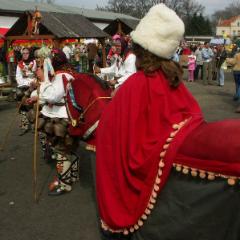
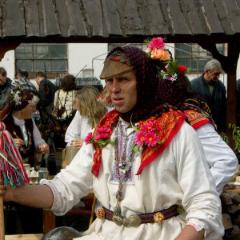
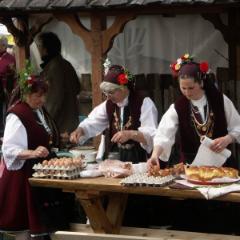
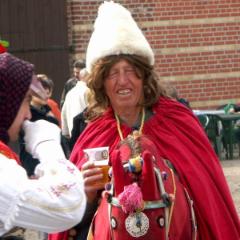
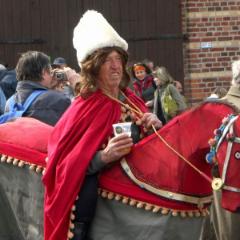
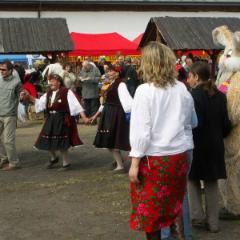
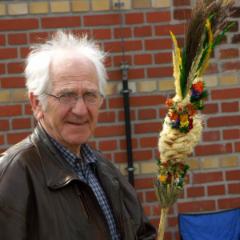
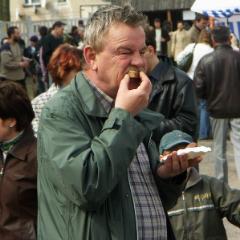
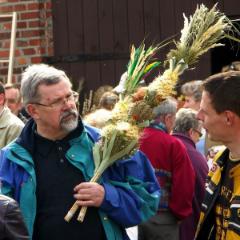
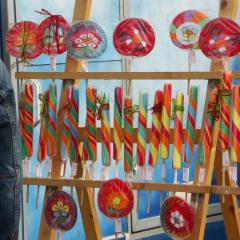
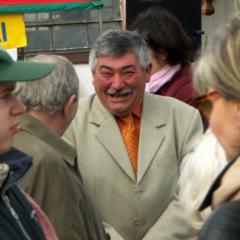
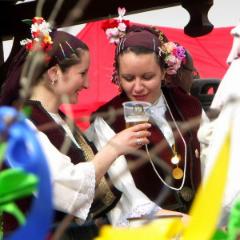
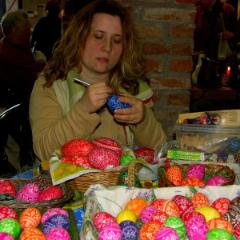
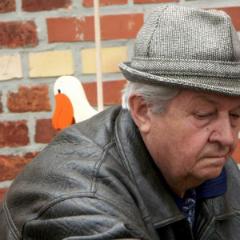
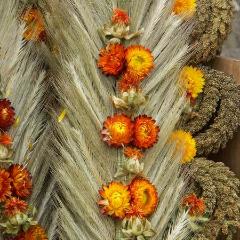
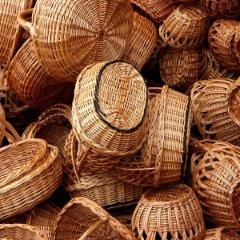
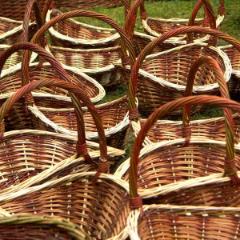
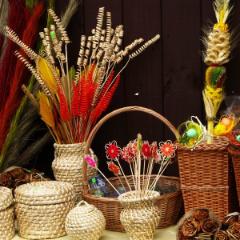
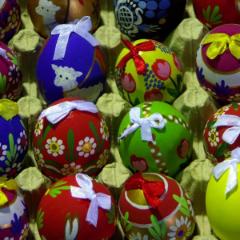
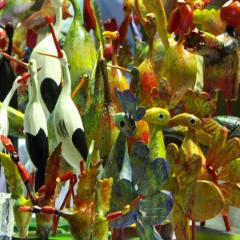
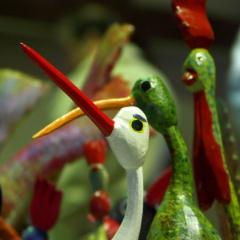
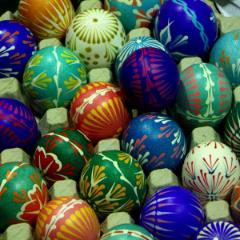
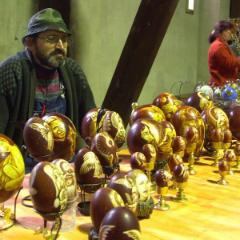
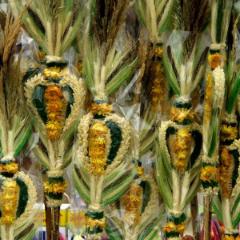
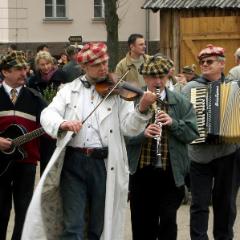
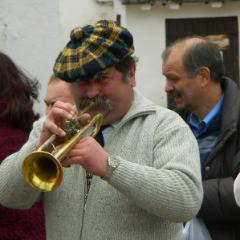
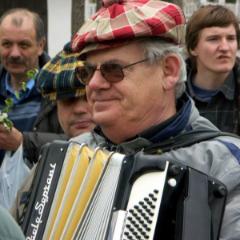
Pokaz bułgarskiego Kukeri odbył się w ramach Jarmarku Wielkanocnego w Muzeum Rolnictwa w Szreniawie, 9 kwietnia 2006
In the rural (farming) villages of Bulgaria, the "Kukeri" is an important masked ritual, carried forward from the Thracians. They dance in the last days of the winter, just before nature comes back to life.
This participants in this ritual are male only, dressed in sheepskin garments and wearing scary masks and chanove (copper bells) on their belts, dancing and singing Christmas songs and chants, with the intention to scare away the evil spirits or ghosts which people believed came back to the living ones in winter.
The esoteric meaning in Kukeri is that through a prayer to the god of vegetation together with magical operations there may be obtained a sympathetic influence over nature using the energy of phallic dances performed within orgiastic rites as well as in the final act of plowing and sowing (which is the same through the direct magical connection phallus-plow / vagina-earth / semen-grain) in order to increase fertility
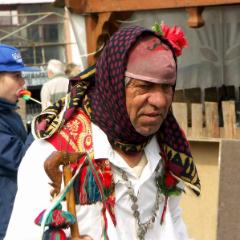
The ritual is a mixture between Christian and pagan traditions and symbols. There is a strong correlation between the event and the peasant life. It is a unique folklore, which can be seen only in Bulgaria. The traditional mask is multi-coloured, covered with beads, ribbons and woolen tassels. The dress too, is colorful and florid once again up to the individual imagination. The heavy swaying of the main mummer is meant to represent wheat heavy with grain, and the noisy clanging of the bells is intended to drive away the evil and sickness.
As recently as the end of the 19th century, the importance of the Kukeri was so considerable that fightings between two different Kukeri groups from neighboring villages often resulted in real, not imitative, murderings.
To experience an authentic Kukeri in these modern times, it seems one must travel some respectable distance from Bulgaria's larger cities of Sofia, Plovdiv and Varna. This is because in the villages close to the population centers where the locals spend their week working in the cities, the true traditions of the Kukeri have become defiled with more cosmopolitan ideas. Suggested village destinations are Ciroka Luka in the Rhodope hills or Koprivshtitza in the Sredna Gora mountains. Either village is just a little more than one hour from the cities, but have held fast to tradition.
Kukeri to ludowy bułgarski rytual pochodzący z czasów trackich. Kukeri to przebrani ludzie, tańczący gdy kończy się zima i gdy natura powraca do życia. Kukerami mogą być jedynie mężczyźni. Przebrani są zazwyczaj w skóry owcze, noszą straszne maski i чанове (miedziane pasy). Tańczą i śpiewają, żeby przegnać złe moce.
Grupa Starcy pochodzi ze wsi Dybene, gmina Karłowo. Działa tam przy miejscowym Czitaliszte (instytucja w Bułgarii pełniąca rolę biblioteki, centrum kultury). Rytuał Kukeri stawiał sobie za cel odstraszenie złych duchów i zapewnienie płodności ludziom oraz światu roślinnemu i zwierzęcemu, co w efekcie oznaczało dostatek i spokojną egzystencję dla ludzi. Odtwarzał on w różnej formie, ale zawsze schematycznej i uproszczonej proces powstawania nowego życia. Mogła być to symboliczna orka i siew lub mniej lub bardziej naturalistyczny czy też tylko symboliczny akt seksualny. W przypadku wsi Dybene w obrzędzie uczestniczą zamaskowani mężczyźni i grupa kobiet. Obrzęd odbywał się na centralnym placu wsi, rozpoczynają go stojące w grupach kobiety. Najpierw śpiewają stosowne pieśni, potem tańczą horo (narodowy taniec zespołowy). Asystują im rozstawieni wokół placu zamaskowani mężczyźni.
Ważnym elementem ich stroju są dzwonki. W przerwach pomiędzy śpiewami i tańcami kobiet dzwonią nimi bardzo donośnie. Pod koniec dnia mężczyźni zdejmują dzwonki, rozpraszają kobiece horo, dwaj z nich chwytają młodą, nie zamężną dziewczynę przewracają ją na ziemię i przytrzymują, a inni przez nią przeskakują.
Pokaz bułgarskiego Kukeri odbył się w ramach Jarmarku Wielkanocnego w Muzeum Rolnictwa w Szreniawie, 9 kwietnia 2006
In the rural (farming) villages of Bulgaria, the "Kukeri" is an important masked ritual, carried forward from the Thracians. They dance in the last days of the winter, just before nature comes back to life.
This participants in this ritual are male only, dressed in sheepskin garments and wearing scary masks and chanove (copper bells) on their belts, dancing and singing Christmas songs and chants, with the intention to scare away the evil spirits or ghosts which people believed came back to the living ones in winter.
The esoteric meaning in Kukeri is that through a prayer to the god of vegetation together with magical operations there may be obtained a sympathetic influence over nature using the energy of phallic dances performed within orgiastic rites as well as in the final act of plowing and sowing (which is the same through the direct magical connection phallus-plow / vagina-earth / semen-grain) in order to increase fertility
The ritual is a mixture between Christian and pagan traditions and symbols. There is a strong correlation between the event and the peasant life. It is a unique folklore, which can be seen only in Bulgaria. The traditional mask is multi-coloured, covered with beads, ribbons and woolen tassels. The dress too, is colorful and florid once again up to the individual imagination. The heavy swaying of the main mummer is meant to represent wheat heavy with grain, and the noisy clanging of the bells is intended to drive away the evil and sickness.
As recently as the end of the 19th century, the importance of the Kukeri was so considerable that fightings between two different Kukeri groups from neighboring villages often resulted in real, not imitative, murderings.
To experience an authentic Kukeri in these modern times, it seems one must travel some respectable distance from Bulgaria's larger cities of Sofia, Plovdiv and Varna. This is because in the villages close to the population centers where the locals spend their week working in the cities, the true traditions of the Kukeri have become defiled with more cosmopolitan ideas. Suggested village destinations are Ciroka Luka in the Rhodope hills or Koprivshtitza in the Sredna Gora mountains. Either village is just a little more than one hour from the cities, but have held fast to tradition.
 |
 |
 |
 |
 |
 |
 |
 |
 |
 |
 |
 |
 |
 |
 |
 |
 |
 |
 |
 |
 |
 |
 |
 |
 |
 |
 |
 |
 |
 |
 |
 |
 |
 |
 |
 |
 |
 |
 |
 |
 |
 |
 |
 |
 |
 |
 |
 |
 |
 |